


3 Key Takeaways from NPTC 2026
Summary: At this year's National Private Truck Council (NPTC) event, many of the leading topics mapped to ATRI's top industry issues, including AI and trucking, driver training, and driver compensation. Thought leaders outlined how each of these issues may be impacting the industry in the year to come, and how carriers can be prepared to respond.

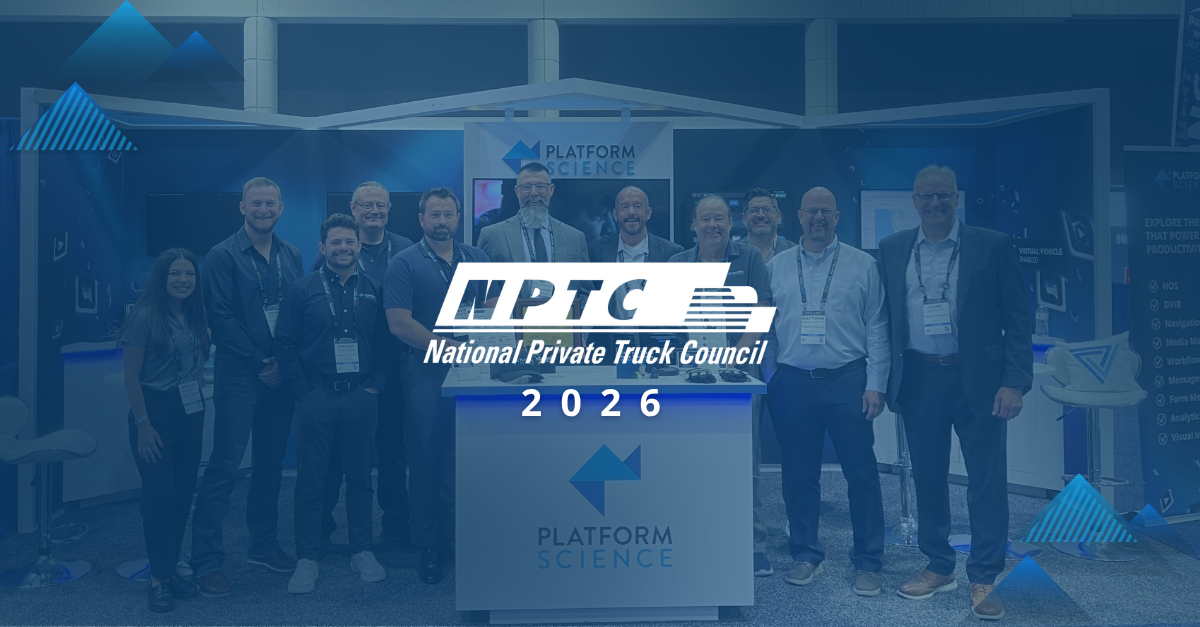
The National Private Truck Council (NPTC) recently held its annual Education Management Conference and Exhibition in Orlando, Florida, covering leading industry issues, thought-leadership, and recommendations for carriers. Platform Science joined more than 1,200 attendees and 170+ exhibitors, and we’ve recapped some of the most interesting topics we heard discussed below.
What is NPTC?
NPTC is an American trade association of corporate or private motor carrier fleets, operated by manufacturers, distributors, processors, and retailers to meet inbound and outbound transportation needs. These fleets also include food, retail, wholesale, construction, and service companies. Every year, the group hosts a Private Fleet Management Institute, an Annual Education Management Conference and Exhibition, and a National Safety Conference.
What were the leading topics at NPTC 2026?
The three leading topics at NPTC 2026 were AI in trucking operations, driver development and ambassador programs, and driver shortage and compensation strategies, which mapped directly to ATRI’s recently released list of top 10 industry issues for carriers and drivers. Speakers and attendees at the show discussed these top-of-mind issues as well as potential best practices and real-world case studies. For example:
1. AI and the Trucking Industry
While industry surveys show many drivers and carriers are concerned about the use of AI in the trucking industry, presenters at NPTC highlighted many of the ways AI is a helpful tool to increase safety, protect drivers and fleets from litigation, and improve workflow. Additionally, across topics, experts seem to agree that some level of human oversight will still be needed to properly manage the use of AI in trucking operations.
- AI for Fleet Safety: Driver-facing AI cameras are becoming non-negotiable. Early signs of fatigue – like microsleeps, yawning patterns, lane drifting, and head nodding – are dangerous driver habits that can be caught by AI before an accident occurs. AI cameras are also invaluable for protecting drivers and fleets from nuclear lawsuits that can put a fleet out of business. Digital evidence is clear and readily available for exoneration.
- AI for Driver Coaching: Cameras shouldn’t be used only to flag risky behavior or to enforce punitive measures. Real-time coaching can serve as a positive reinforcement tool to reward top performers and gamify training through incentives and competitions. AI tools also enable quick follow-up and coaching in the case of a safety event at a pace no longer manageable by human supervisors alone. Finally, AI can be helpful in recruiting and driver development by automating communications and follow-up to enable more consistent and responsive interactions.
- AI for Routing: Intelligent routing provides drivers with safer, more efficient routes. For example, the low-bridge strike problem is being eliminated as AI automatically routes around hazards. Other real-time updates on road conditions, congestion, and weather keep drivers safer, save fuel, reduce idling time, and help them stay on schedule, improving job satisfaction and keeping customers happy.
- AI for Corporate Needs: AI tools can assist in the corporate side of trucking as well, as people are using AI to write training scripts, draft policy, and practice tough conversations before they occur. For example, safety managers can use AI to prepare for C-suite ROI conversations, including practicing responses for pushback before they’re in the room.
Related Reading: AI for Cybersecurity
2. Driver Development and Training
Driver training also showed up on ATRI’s top 10 industry issues list, and several workshops and discussion groups at NPTC 2026 focused on this topic as well. Case studies were discussed in which fleets put extra effort into identifying potential internal trainers – or "ambassadors" – to help improve retention rates, safety scores, and company culture.
The ambassador program identifies internal candidates who are well-suited to mentor newer drivers. Special attention is given to an ambassador’s personality traits — such as patience and teaching ability — rather than just a clean driving record, since the best drivers don’t necessarily make the best trainers. Because ambassadors are at the peer level and non-disciplinary, drivers were more receptive to their guidance than they would be to management. The duration of the mentorship was extended to a full year, and results yielded drastic improvements in turnover rates.
Fleets should invest in additional training in communications and teaching skills for these ambassadors, and look for creative ways to incentivize and reward them. The case study carrier used a points-based comp system that was redeemable for tools, gift cards, meat, and gaming equipment. When conducted correctly, an ambassador program can be a fleet’s single most powerful retention tool.
Related Reading: 3 Ways to Make Training a Positive Experience for Your Drivers
3. Driver Shortage and Compensation
Fleets continue to work to understand the driver shortage and how to optimize compensation to recruit more efficiently and retain their best drivers. More existing drivers are being sidelined as disqualification rates are increasing for a wide range of causes, including the drug and alcohol clearinghouse, immigration reform, and more sensitive hair follicle testing.
Trucking is also facing increased competition from industries like construction, where salary rates are outpacing the recent salary rate increases seen in trucking. Making matters more complicated, truckers seem uninterested in new “hybrid” compensation packages, and pay confusion is a real problem for recruiters and drivers alike.
Presenters also noted that the trucking industry must find ways to address Gen Z and Millennial workers' need to find purpose in their work. The brand connection matters, and a fleet’s interaction with its community through charitable activities can help younger drivers feel more loyalty and reduce attrition. Additionally, attention should be paid to potential communication gaps between older generations — many of whom may now be in dispatch or management roles — and younger drivers.
Finally, the industry must be more proactive in reaching out to potential younger drivers earlier in life. Activities such as high school CDL training programs, curriculum partnerships, career tech education, and community outreach like “Touch a Truck” events help raise awareness of trucking as a rewarding and beneficial career path.
Related Reading: 6 Ideas for Improving Driver Retention
Platform Science works with fleets to create fleet management systems that help drivers thrive, optimize operations, and improve real-time data insights for better business decisions. Explore our product offerings now or schedule a demo to see how telematics technologies can help your business.


