

Request information from Platform Science about
Neural Sentinel™
by
Fleet Defender

Neural Sentinel provides real-time cyber and asset protection detection for trucks running Virtual Vehicle, with no hardware to install. It flags unauthorized Wi-Fi and bluetooth connections, telematics tampering, possible GPS spoofing, CVD reporting loss, suspected fuel theft, and prolonged dwell past your thresholds. Qualifying detections become managed incidents in your console, with supporting data, ownership, and guided response steps.

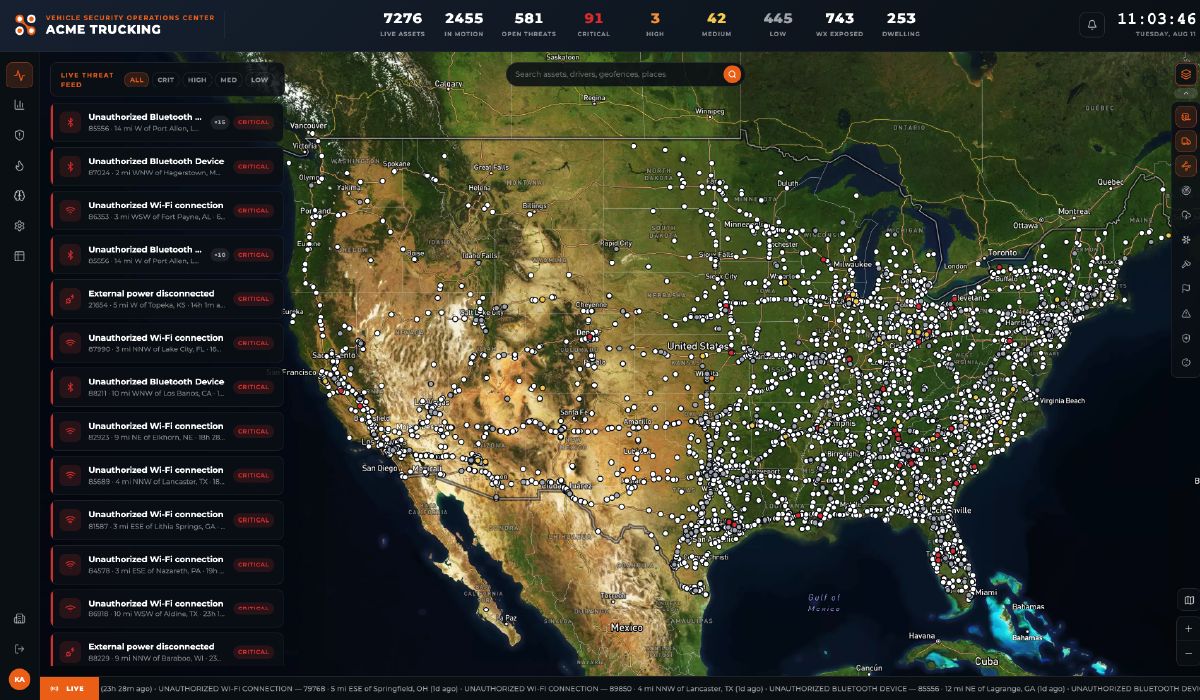
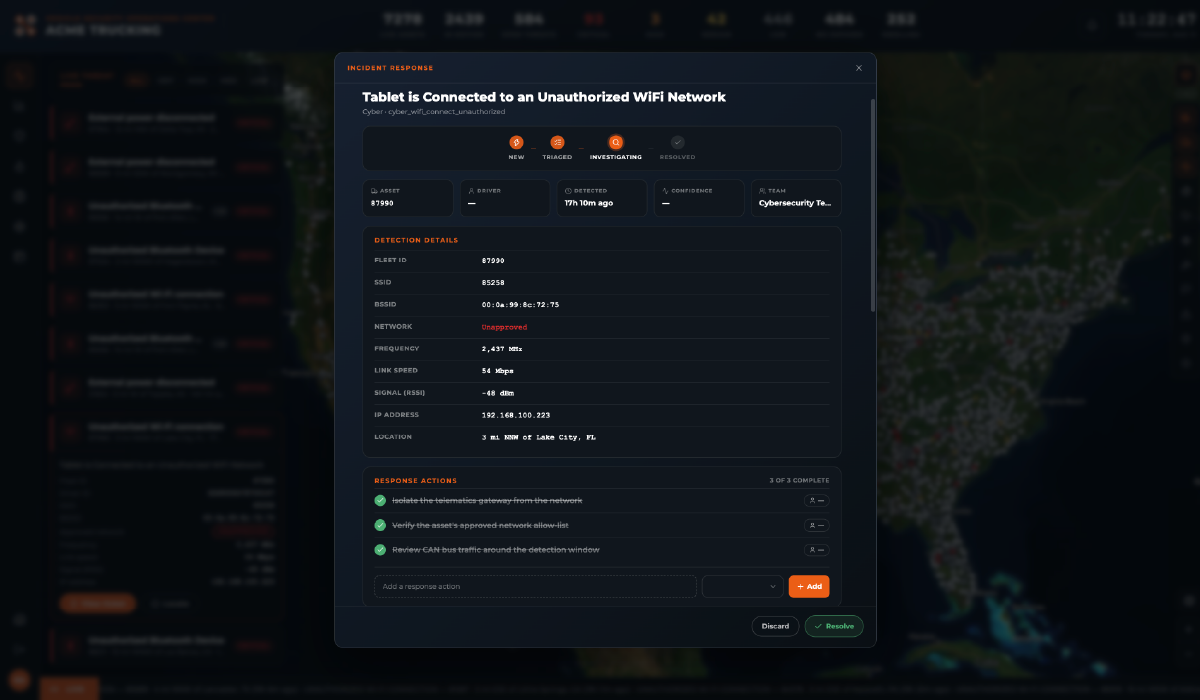
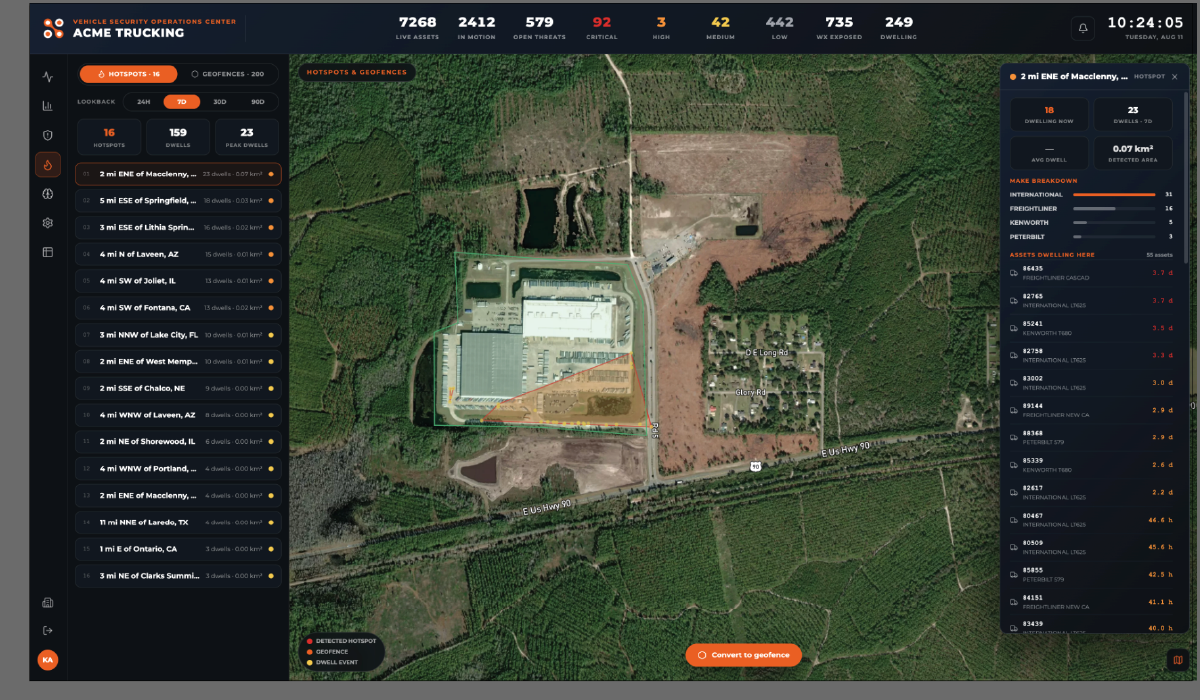
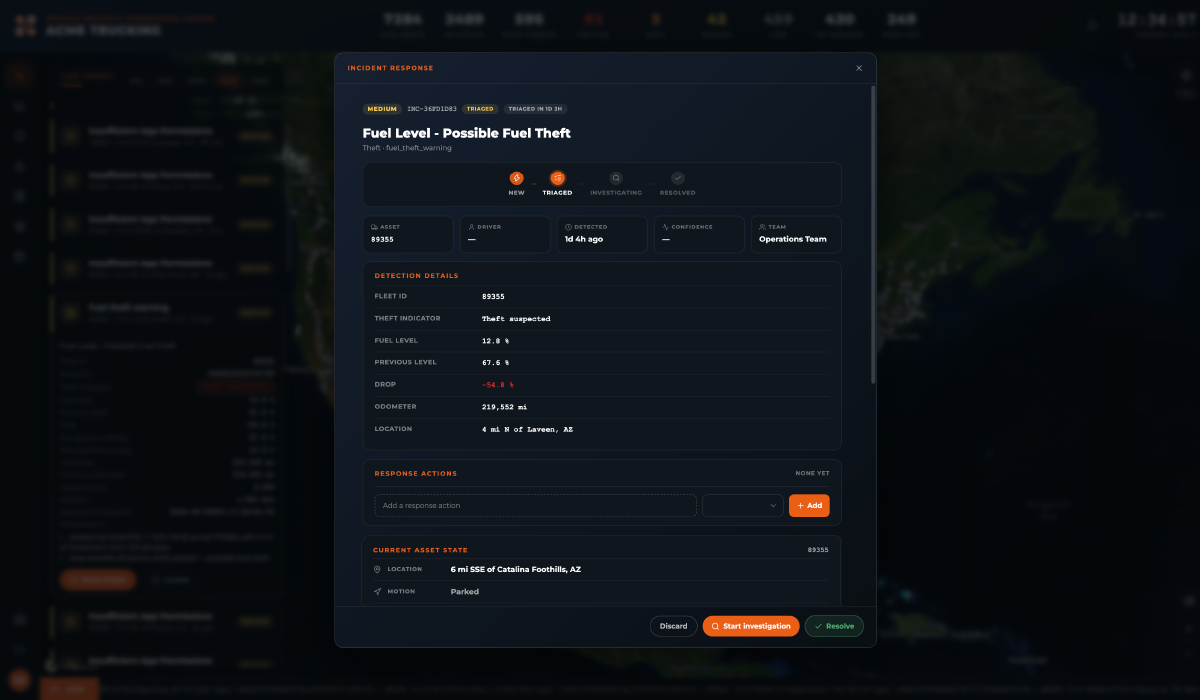

Neural Sentinel runs continuous automated detection on trucks enrolled through Platform Science Virtual Vehicle across three areas of risk: cyber, asset protection, and environmental. On the cyber side it detects unauthorized Wi-Fi and Bluetooth connections to the in-cab tablet, telematics tampering, possible GPS spoofing, and loss of CVD reporting, which may indicate a fault or disconnection.
On the asset protection side it detects unauthorized fuel card use, such as fuel bought on the card that never reaches the truck's tank, and tank-level drops that do not match ignition state or movement. It flags assets dwelling past thresholds you set per location type and clusters where trucks are sitting that you have not geofenced yet. It also detects trailer doors opening where they should not, trailers coupled to an unexpected tractor, and reefer temperature outside the range an order requires.
Real-time alerts appear in your VSOC for your team to review. The incident response workflow is customizable: you set the thresholds that create incidents, map alert categories to the teams that own them, and edit the playbooks attached to supported detections. Closing an incident requires a disposition of true positive, false ositive, or benign, creating a record of outcomes and response activity. Deployment is software-only through your Virtual Vehicle environment, with no vehicle hardware to install or remove.
Pilots are free and enroll your whole fleet.
• Vehicle cyber-threat detection — Unauthorized Wi-Fi and Bluetooth connections to the in-cab tablet, telematics tampering, possible GPS spoofing, and loss of CVD reporting, which may indicate a fault or a disconnected device.
• Suspected fuel-theft detection — Flags unauthorized fuel card use, such as fuel bought on the card that never reaches the truck's tank, and tank-level drops that do not match ignition state or movement.
• Trailer door monitoring — Flags a door opening at any location where the trailer should not be opened, so you learn about it in transit rather than at delivery.
• Tractor-trailer pairing — Flags a trailer coupled to an unexpected tractor.
• Reefer temperature compliance — Flags temperature outside the range an order requires, whether the cause is a failing reefer unit or a door someone opened. A temperature change with no matching door event can also indicate a disabled door sensor.
• Dwell tracking — Sets warning and violation thresholds by location type, including customer, dealer, maintenance, and terminal locations.
• Geofencing and hotspot detection — Draw zones over facilities and see which assets are inside and how long they have been there, and surface clusters where assets are sitting that you have not fenced yet, ready to convert to a zone in one click.
• Vehicle Security Operations Center (VSOC) — Your teams workspace for reviewing alerts, asset context, geofences, assignments, response actions, and incident history.
• Configurable incident creation — Set severity thresholds by alert category so qualifying detections automatically become managed incidents.
• Response playbooks — Default checklists for supported cyber, fuel-theft, and dwell detections, tracked to completion and editable per fleet.
• Roles, teams, and routing — Administrator, analyst, and viewer roles alongside functional teams, with each alert category mapped to the team that owns it so new incidents assign automatically.
• Disposition tracking — Incidents close as true positive, false positive, or benign, building a record of detection outcomes.
• Tunable allowlists — Wi-Fi and Bluetooth allowlists are configurable per fleet, so detections match your approved environment rather than a generic baseline.
• Weather and public-safety exposure — Flags assets within configured National Weather Service and FEMA/IPAWS affected areas, with fleet-defined severities and geographic buffers.
• Continuous automated detection — Runs around the clock across enrolled assets, including nights, weekends, and yard time, while your team retains control of investigation and response.
• Unified cyber and asset protection visibility — Vehicle cyber threats, suspected fuel theft, dwell risk, and trailer events in one place your team controls.
• Fewer detection blind spots — Automated detection continues overnight, on weekends, and during yard time, even when nobody is watching the VSOC.
• No additional vehicle hardware — Deploy through your existing Virtual Vehicle environment without scheduling a physical installation.
• Cargo and trailer protection — Doors opening where they should not, unexpected tractor pairings, and temperature excursions surface as incidents your team owns.
• Alerts arrive with response guidance — Supporting detection data and editable response steps help a shift act consistently without reaching for a separate playbook.
• Documented detection outcomes — Required dispositions and tracked response actions create a record of true positives, false positives, benign events, and how each incident was handled.
• Configured to your operation — Severity thresholds, team routing, response playbooks, network allowlists, dwell limits by location type, and weather-event severities are set per fleet.
• Measurable coverage — Track covered assets, detection volume, categories, and resolution outcomes to evaluate coverage and tune thresholds.


