


Understanding DVIRs: Keeping Your Fleet Safe and Compliant
Quick summary: Commercial drivers are required to conduct pre- and post-trip inspections to ensure safety and compliance. Driver Vehicle Inspection Reports (DVIRs), specifically modern digital versions, can greatly reduce time spent on paperwork and benefit the fleet in multiple ways, from improved insights, easier reporting, and increased driver satisfaction.
The FMCSA and commercial fleets have been working for decades to find the right balance between inspections and caution, while recognizing the billions of dollars wasted every year on paperwork for trucks in good condition.
In 1939, the Interstate Commerce Commission (ICC) first required drivers to submit a written report on the commercial vehicle's condition at the end of each day, with the primary goal of reporting defects that could affect safety. 75 years later, the FMCSA issued a new regulation requiring reports be submitted only when a defect was found or known, reducing an estimated 46.7 million hours of annual paperwork for drivers and saving the industry approximately $1.7 billion annually.
Now, with the advent of eDVIRs and associated technology designed to make inspections and reporting more efficient than ever, drivers can further reduce their busywork and get back on the road faster, while still trusting their vehicle is safe and compliant.
What are the Current DVIR Requirements?
Currently, FMCSA Driver Vehicle Inspection Report (DVIR) rules require pre-trip and post-trip inspections for CMVs over 10,001 lbs., passenger vehicles (8+ occupants), or hazmat carriers, but drivers need to submit a report only if they find a safety-related defect or deficiency. A “no-defect” DVIR is not required to be submitted. However, carriers can choose to mandate reports, and all reports with defects must be kept for three months, according to 49 CFR 396.11 and 396.13, and FMCSA guidance.
How does a DVIR improve safety and compliance?
A regular, standard vehicle inspection helps ensure the safety of drivers and cargo, as well as other drivers on the road. Drivers inspect key components, like brakes, steering, tires, lights, mirrors, wipers, horn, coupling devices, and emergency equipment. Any defects that affect safe driving are documented to be repaired before the vehicle is operated again.
Catching small issues before they become bigger problems is a key way for a fleet to save money. It reduces the risk of a truck breaking down on the roadside, which puts the driver at risk and impacts the cargo's delivery timeline. Malfunctioning parts can lead to dangerous accidents, putting lives at risk and resulting in lawsuits with “nuclear verdicts” that can easily bankrupt a fleet.
Similarly, correcting compliance-related defects can help prevent costly fines and even an out-of-service order that disrupts your driver shifts and delivery commitments. Keeping ahead of compliance requirements and manufacturer-recommended maintenance timelines extends the life of your vehicles, driving down total cost over time.
What are eDVIRs, and how do they benefit fleet operations?
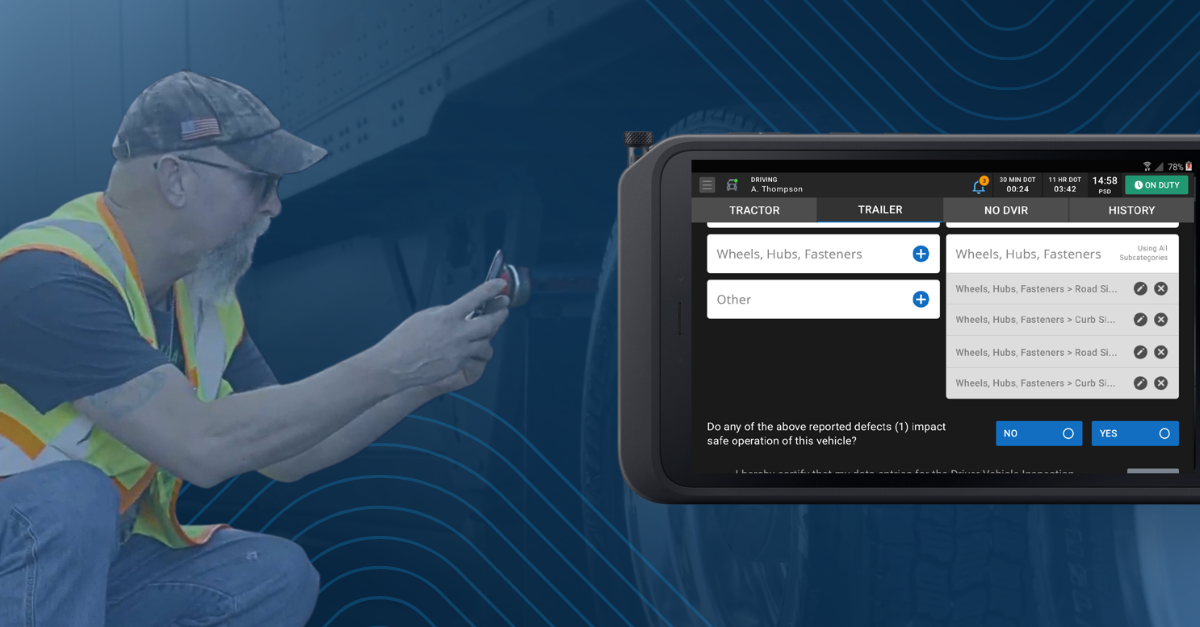
Digital DVIRs — sometimes called eDVIRs — significantly simplify the inspection and reporting process for drivers and fleets in the following ways:
- Reduction in paperwork: Inspections are stored digitally and are easily accessible remotely by authorized members of the organization as needed. This simplifies roadside inspections as well and removes some of the mental load and stress from drivers, who can feel confident they will always be able to easily access requested documents whenever needed.
- More efficient communication: Tools like photo functionality allow drivers to attach images from the road for elements of concern. This can better inform the maintenance team in advising on next steps and in ensuring the necessary repair parts are ready and waiting.
- Fewer errors: Elements like drop-down menus, intuitive prompts, and pre-filled fields not only save drivers' time but help reduce data entry errors, improving the quality of fleet data. Fleets can add pre- and post-trip inspections to their established workflow to ensure drivers always remember to complete them, and are able to do so easily and efficiently
- Easier record storage: Digital inspection records are easy to share and store for the 3-month requirement, and easier to access when required for reporting, compliance, or internal improvement projects.
- Better integration: Digital records, when properly integrated, enable fleets to work smoothly with maintenance scheduling, inspection requirements, the back office, and other teams to ensure defects are reported and resolved as efficiently as possible.
- Shortened repair cycles: Digital DVIR tools sometimes offer the ability to update vehicles’ maintenance statuses and the option of digital three-signature requirements, significantly cutting down the time spent waiting for in-person sign-offs on repairs. The back office can also easily track this digital paper trail to ensure compliance with all requirements.
- Improved driver satisfaction: Digital DVIRs help ensure drivers do not have to enter duplicate information or waste precious drive time on busywork. Some DVIR tools offer a “no defect” option that, If no issues are found, allows drivers to select “No Defect,” certify, and submit in seconds without any unnecessary clicks. At the same time, drivers know their vehicles are safe and compliant every time they climb into the cab, which improves their confidence and builds a strong reputation for your fleet for recruitment and retention.
DVIRs Deliver Safety and Driver Satisfaction
Finding the balance between safety and busywork is easier than ever, thanks to eDVIRs that help drivers optimize their inspection time without sacrificing essential regular safety inspections.
Learn more about DVIRs and how they can help your fleet operate more efficiently and safely by exploring the DVIR technologies from Platform Science.


